CD Projekt Red: What’s in a Trademark


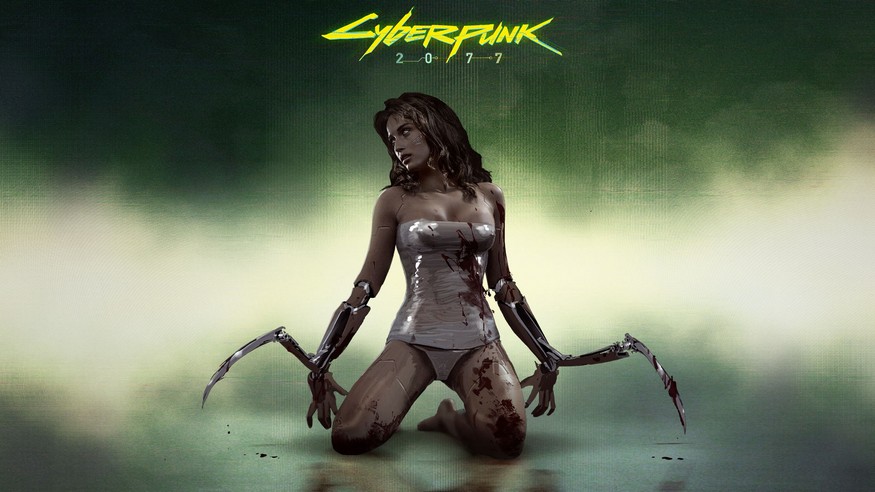
So, by now, I’m sure everyone and their uncle has heard about CD Projekt Red filing a trademark for the term Cyberpunk. Even though they actually didn’t, but more on that in a moment.
The key issue here revolves around the way trademarks, or more accurately, copyright, is enforced in today’s media world. The memories of King and their ludicrous “let’s sue Stoic because they used the word Saga” shenanigans are still fresh in a lot of people’s minds, and there’s some understandable, if misguided, concern that something similar may come from CD Projekt.
There are a number of reasons these concerns are almost entirely bunk, not least of which being that a lot of people seem completely unaware of what a trademark is, or what this particular trademark is about. Not to mention the fact that CD Projekt have a strong, well known history of being really, really good to just about everyone on the planet.
Okay, first off all, we need to take a look at what a trademark really is, because there’s some overlap, and thus confusion, over how it differs from copyright. For the sake of a very loose, gross oversimplification, first think of it like the former (trademark) is the smaller, more relaxed version of the latter.
In very simple terms, a copyright would prevent, for example, anyone from making a show about a spaceship on a seven year journey of discovery, with an oversexed Captain, an alien Science Officer with pointed ears, a crotchety old curmudgeon of a ship’s Doctor and so on. Even if they called it, “Walking Up the Stairs to the Back of the Department Store”, it would still be a pretty clear copy/paste of Star Trek, as such, would be a prime target for a copyright claim.
Likewise, even if the series, film or whatever, was about three autistic snails riding on the back of a dog and forming a libertarian society. If it was called Star Trek, would still be liable to copyright infringement claims, because the name is a copyright. Meaning Paramount, the Roddenberry Foundation and everyone else involved in the making of Star Trek, would have a strong case for, with the former, insisting things be changed notably, or in the latter a change of name.
However, if the name Star Trek was only a trademark, as will be the case with Cyberpunk, it would be far more difficult to enforce, because there would be an onus on behalf of the claimant, Paramount in this case, to prove that people would be likely to confuse the two and/or the new property was making an attempt to capitalize on the success of the better known IP. Or, put simply, they could only sue you if you were trying to make money on the back of their success.
Which brings up back to CD Projekt Red. See, they have filed a trademark, specifically focused on the use of Cyberpunk as a name for a work of media. Which means that it can only, really, be applied in the case of someone using Cyberpunk as a name for their game, book or whatever. Which is not nearly as nefarious as some people seem to think. It’s a very common practice and, in fact, there was already a trademark in effect in favour of Mike Pondsmith and R. Talsorian Games, creator and publisher of the Cyberpunk 2013/2020 tabletop role-playing game. A trademark that has, clearly, not affected other people making works of cyberpunk fiction in the past.
See, whilst the trademark, either new or old, could be used to make a claim against someone making a game called “The Adventures of Joe Bloggs in the World of Cyberpunk Bunnies”. It would be a fruitless effort because, well, it’s highly unlikely that anyone would mix that up with a game called Cyberpunk 2077. It also would not, and has not, in any way prohibit someone from producing a novel in the cyberpunk genre, because you can’t really copyright or trademark a genre, even if you out and out created it. Furthermore, I really don’t see CD Projekt being the type to ever try something like that.
To look at a similar trademark, let’s go back to the early days of comics. Did you know, the word superhero is, in fact, a joint trademark between DC and Marvel comics? Yeah, believe it or not, they actually created not only the word, but the concept of a superhero as we now understand it. They do, legally speaking, have the right to claim that anything that shows any kind of hero with super powers or abilities is an infringement on their trademark. They have the right to file a cease and desist, either together or apart, but have you ever heard of that actually happening? Even in the case of something that clearly is a direct rip-off of something they created?
Well, actually, there was a bit of a kerfuffle around City of Heroes, for a while, because players were able to create characters that were pretty clear, direct copies of some of their more popular characters. Specifically Spider-man, Wolverine and Superman. It was still a fairly small affair when push came to shove, but it serves as a strong example of the power, or rather lack of, that a trademark has in real world terms.
Meanwhile, have you ever wondered why 20th Century Fox hasn’t changed its name, even though we’re almost two decades into the 21st century? I’d put money on, at least in part, that being because the name 21st Century Fox already has an existing copyright, and despite the massive collateral Fox have behind them, it seems they have very little interest in challenging it because it simply would not be worth the ballache.
So, basically, the point here; calm your tits! There’s nothing nefarious going on, CD Projekt (probably) aren’t intending to sue the butt off everyone and anyone they can. They even issued a statement to that effect, which is fairly comprehensive and worth a read. This is all par for the course and happens, literally, on a daily basis.
Honestly, I think the only reason this has turned into such a huge issue is because of how overt CD Projekt were about it. These types of things aren’t usually mentioned simply because it’s such a common practice. Trademarks exist to protect creators from people trying to cash in on the success of their work.
I think most of us can agree, they have the right to do so, and lets be honest, if it was something you were working on, you wouldn’t want other people jumping in and profiting from your hard work either.


Activity
-
Cat Cafe Manager – Releasing April
5 years ago
On my birhday! Nice -
Chicken Police – Releasing November
6 years ago
Wut? -
Final Fantasy XVI – Announcement (Updated)
6 years ago
This might be an actual Final Fantasy for a change. I'll remain sceptically optimistic -
Future Games Show August 2020
6 years ago
Die by the Blade didn't just steal the show, it is the show, now -
E3: Guerrilla Collective 2020 Day 1
6 years ago
No Werewolf? Interesting
Comments (0)