

The Defence
|
|
The Prosecution
|
|
|
|
This, my friends, is the review of the earliest Total War game that you can play today without getting your eyes to bleed. One of my then not-yet-colleagues wrote an excellent review from the viewpoint of the Julii family. I missed the game, probably because of the perpetual obsolescence of my PCs and fell in love with Medieval II: Total War. Now, the Steam sale finally let me pull moves on its older, homelier sister.
Unlike later TW games, Rome’s campaign gave you the choice of only three factions – not even countries – the three competing Roman noble houses: Julii, Brutii and Scipii, united by their techtrees, culture, fealty to Rome and double “ii” at the end. Julii are supposedly the youngest while Scipii are the wealthiest. The most important deciding factor is, however, that Julii have red as the faction color – and who in their right mind would want to run around with blue or green legionaries?
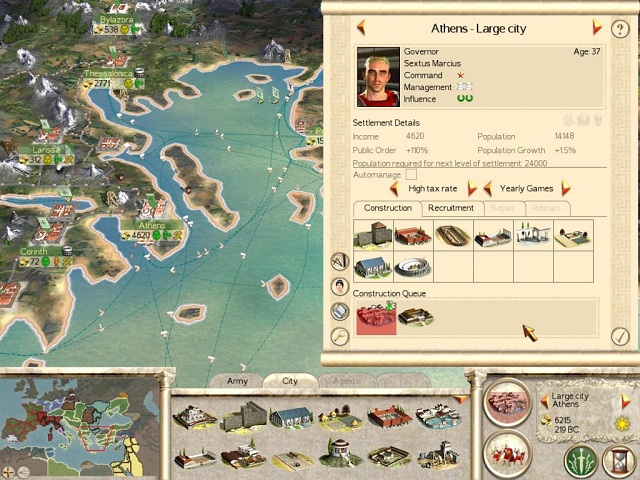
Like all Total War games, Rome has two map modes: campaign and battle. Campaign is where you’ll spend the most time, raising and moving armies, hunting down rebels and bandits, sending family members to manage settlements, ordering buildings to be built in cities, ordering around diplomats and spies… In other words, this game is awesome. The welfare of your faction depends on the cities and these are ruled by various factors, like culture, distance from capital and such. The worst thing is the totally broken squalor system, which will quickly drive you to bankruptcy as you struggle to maintain the huge garrisons that keep the Pax Romana in the cities. Or maybe I’m just a shitty manager.
Well, at least I’m a better warlord than the AI. Don’t ever let, at least on default difficulty, AI fight for you – this will only end with the mighty Roman empire ALWAYS losing more troops that some unwashed barbarians with swords from pressed moss. The Romans – don’t kid yourself that you’ll play for anyone else – are extremely infantry focused and, before the Marius reformation, the only kind of decent cavalry is the Generals bodyguard. Being a Cavalry shunning folk, they also lack Spearmen in any substantial number and the player often has to rely on auxiliary troops or mercenaries to combat this threat. So, when you play yourself, you’ll have to command your infantry wisely and do many cavalry charges (devastating to infantry) to soften the enemy horde.
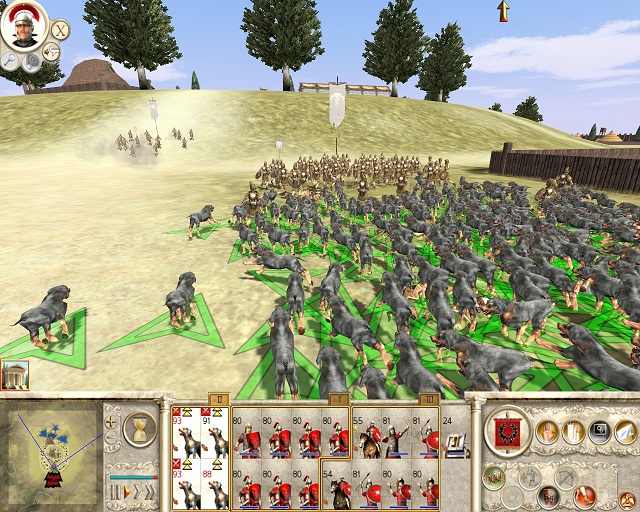
Now, when the lines of men crash, you’ll see that the Romans won because they had more than great weapons: they had excellent troop morale and enemy units will fold and rout like it ain’t no thing. Such things as morale and stamina are actually shown on the unit card once you’re close enough and mouse over it. Crushing the enemy morale – by crushing their troops, killing their generals, charging or using the rare scary unit – is the key to victory. Unless you’re fighting rebels in the lands of modern day Turkey. You see, when people boot you out of a city, the rebels gain random units. And those Byzantine anarchists can gain up to four units of General Bodyguards (sans generals) which is horrible for any Roman infantryman. And let’s not forget Spain that has 2 hit point Bull Warriors in almost every army you see!
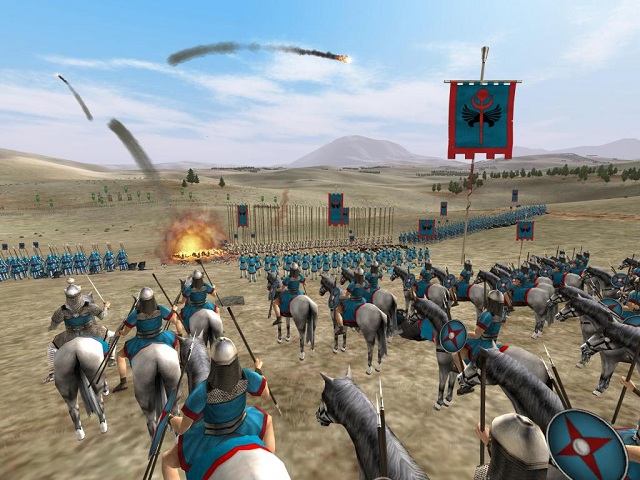
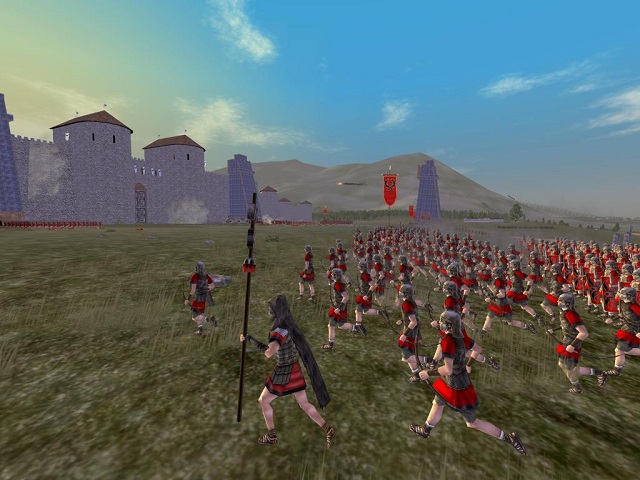
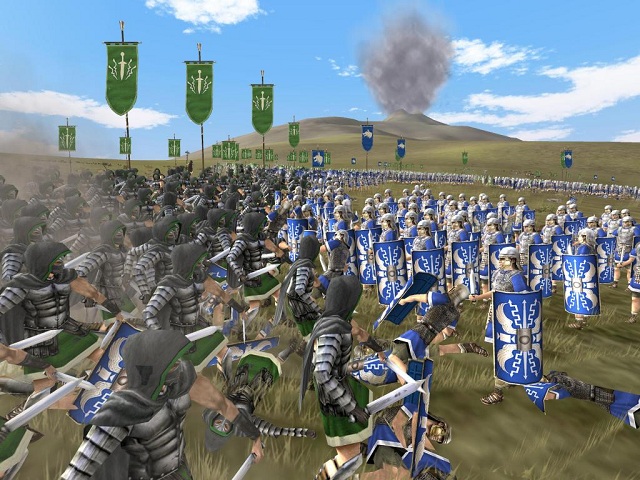
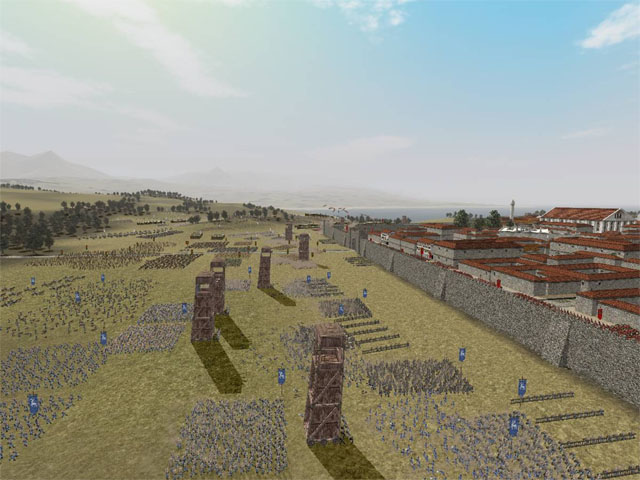
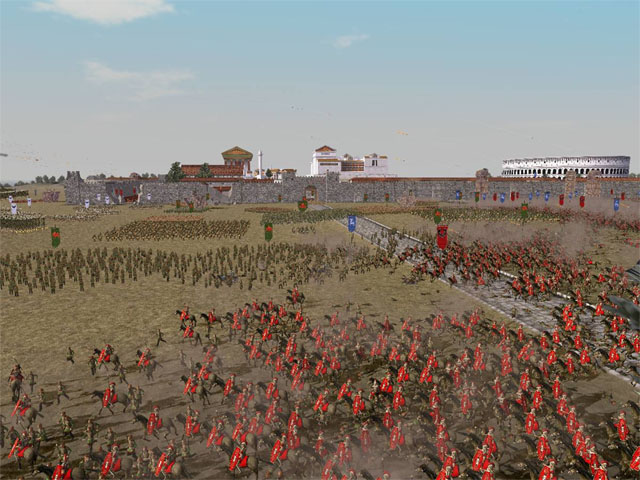
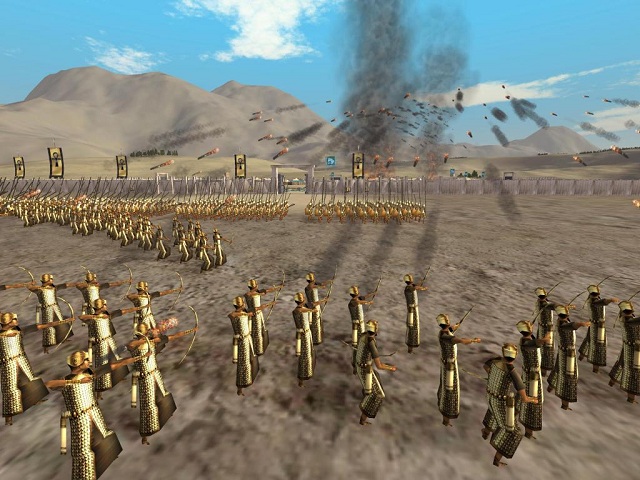
All of this is done in 3D battlefields with armies of about up to 1500 (sometimes more, often less) men crashing in real time. The places of bloodshed are many and varied, dotted with hills giving various advantages trees hiding infantry and so forth – and cities that need to be besieged and taken. While randomization of troop models is still in the future (that is, Medieval II), the units look great, especially the Roman legionaries, standard bearers and war dogs.
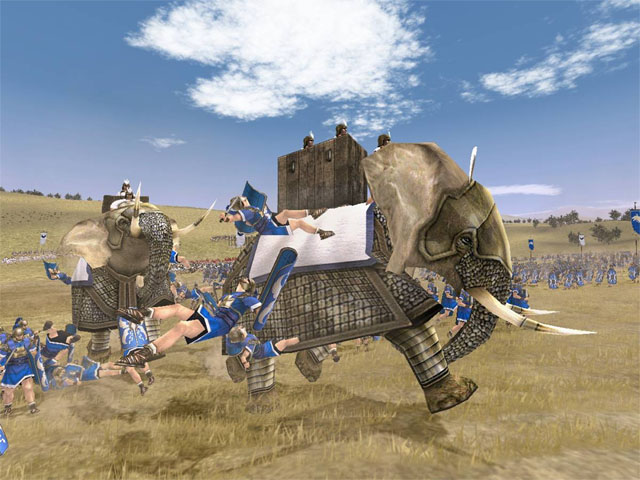
It’s a pity, then, that the factions see such a lack of original units. The four Roman factions share the same tech tree while the other countries have a lot less variety – and some units are shared, changing only color and names. Hell, two other factions have their own knock-off versions of legionaries! In the end, this makes protracted wars tedious (“woohoo, crushed my 100th Warband, yay…”) and playing other factions – they’re unlocked once you’ve beaten them in the campaign – is a bit boring.
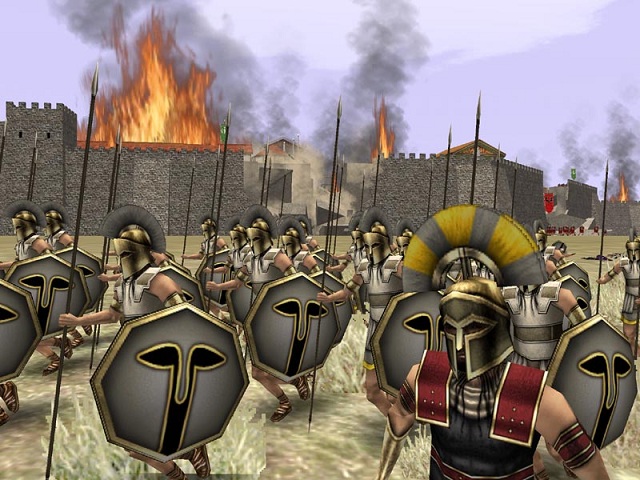
Yet despite squalor and lack of unit variety (then again, this was made in 2004 and Empire was even less varied), it’s still an involving, exciting game that has aged quite gracefully – though Warhammer 40K: Dawn of War probably fared better in this respect. You’ll spend hours managing cities, killing rebels and bandits and destroying other cultures. And then one day you’ll have to decide that Rome is aching for your gentle and wise rule…
Gallery
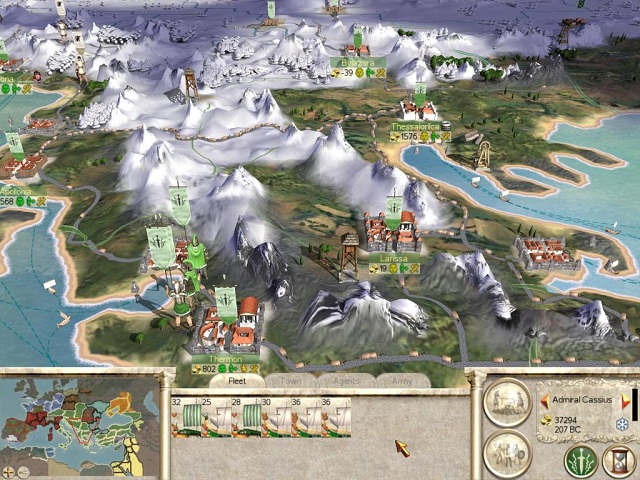
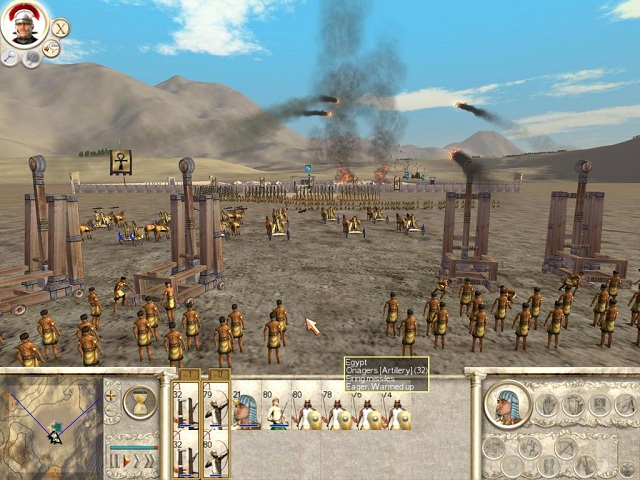
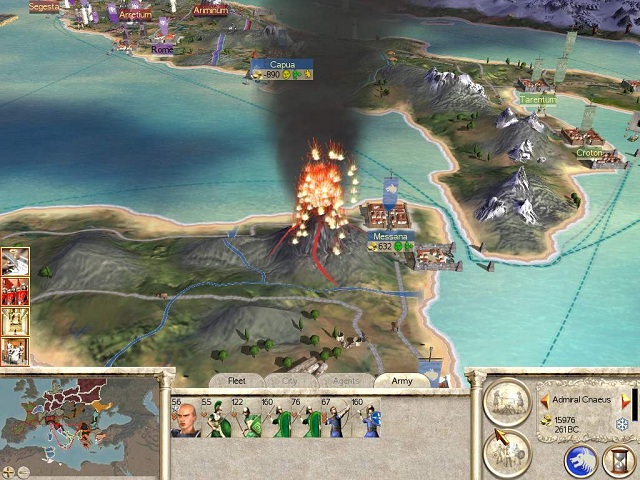
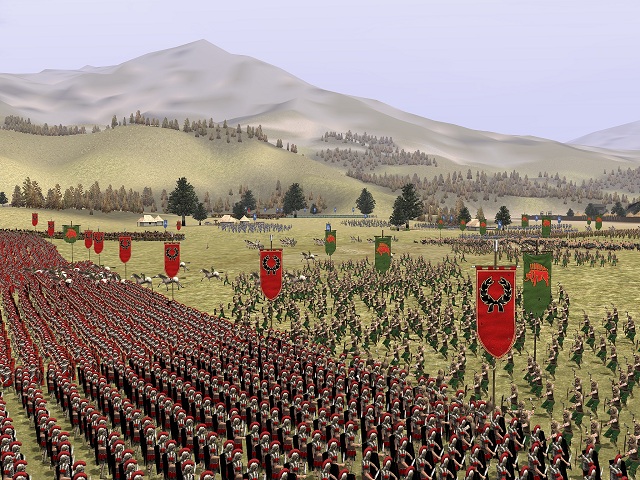


Activity
-
Cat Cafe Manager – Releasing April
5 years ago
On my birhday! Nice -
Chicken Police – Releasing November
6 years ago
Wut? -
Final Fantasy XVI – Announcement (Updated)
6 years ago
This might be an actual Final Fantasy for a change. I'll remain sceptically optimistic -
Future Games Show August 2020
6 years ago
Die by the Blade didn't just steal the show, it is the show, now -
E3: Guerrilla Collective 2020 Day 1
6 years ago
No Werewolf? Interesting
Comments (0)